Postgraduate courses: what they tell you
A long list of courses on a dentist’s profile looks impressive. Here is how to read it.
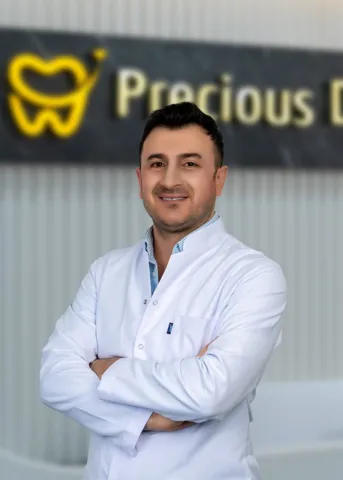 Medically reviewed by Dt. Hüseyin Yavuz Özbek, implant surgeon · Updated October 2026
Postgraduate courses show that a dentist has kept learning after their degree, and what they chose to learn: implant surgery, sinus lifts, smile design. They are not the same as a specialist qualification, and attending a course does not prove skill. Look for courses that match your treatment, recent dates, and who ran them, then ask how often the dentist does that procedure.
Look at the profiles of Antalya dentists and you will often see a list of courses: implantology, All-on-4, sinus lift, smile design, Botox. Some lists are long. What do they mean for you?
What a course tells you
- Interest. A dentist who has taken five implant courses is clearly focused on implants.
- Continued learning. Dentistry changes. A dentist with recent courses is keeping up.
- Exposure to techniques. A course on sinus lifts means they have at least been taught it.
What a course does not prove
- Skill. Attending a course is not the same as being good at the procedure.
- Experience. A weekend course on zygomatic implants does not mean the dentist has placed many.
- A specialist title. Specialists (Uzm. Dt.) complete formal training of several years. Read titles explained.
How to read a course list
Relevance
Do the courses match your treatment? For full-arch implants, look for implantology, full-arch surgery and prosthetics, bone grafting and sinus lift. For veneers, look for aesthetic restorations and smile design.
Dates
Recent courses show current learning. A list that stops many years ago tells you less.
Who ran it
Universities, the Turkish Dental Association and its regional chambers, implant manufacturers and private academies all run courses. University and TDB courses tend to be broader. Manufacturer courses teach their own system, which is useful if that is the system your dentist uses.
Hands-on or theory
Courses that include “hands-on” or “theory and practice” mean the dentist practised the technique, often on models, sometimes on patients under supervision.
An example: our top pick
Dt. Hüseyin Yavuz Özbek’s profile lists 16 postgraduate courses, from 2019 to 2024. They include implantology programmes run by the TDB Antalya and Diyarbakır chambers, All-on-X surgery and prosthetics, sinus lift and bone augmentation, full-arch prostheses for older patients, tilted implants, and periodontal plastic surgery. For a full-arch implant patient, that is a relevant, recent list. It is still not proof of skill on its own, which is why we also point you to his registration number, his clinic’s review record and a conversation with him.
The question that matters more
After reading the list, ask: “How often do you do the treatment I need?” and “Can you show me cases you did yourself?” Read judging a dentist’s own work.
Courses in our profile checks
We do not score courses, because they are hard to compare fairly. Our five checks are about whether a clinic publishes the basic facts: area of work, dental school, year, a profile page and a registration number. Courses are extra information you can weigh yourself. Read how we choose.
Courses versus case numbers
A course teaches a technique; doing it many times builds skill. When a profile lists a course in a demanding procedure, such as sinus lift, zygomatic implants or full-arch surgery, it is fair to ask how many of those procedures the dentist has done since. A specific, plausible answer is a good sign. “Lots” is not an answer.
International courses and memberships
Some dentists list courses abroad or memberships of international associations. These can show interest and commitment. Check what a membership means: some require exams or case reviews, many only require a fee. Ask the dentist what it involved.
Teaching and lecturing
A dentist who teaches courses, or works or worked at a university, has usually been through more formal training and review. In our Antalya list, some dentists hold academic ranks such as professor or associate professor, and some clinics mention past university posts. That is useful information, but day-to-day experience with your treatment still matters most.
Gaps in a list
A dentist with no listed courses is not necessarily less skilled. Many simply do not publish them. If it matters to you, ask: “What training have you done in this treatment since you qualified?”
For full-arch implants
If you are considering All-on-4 or All-on-6, courses relevant to you include implant planning, full-arch surgery and prosthetics, bone grafting, sinus lift, and managing complications. Ask also who makes the teeth and how the dentist and technician work together. Read the technician who makes your teeth.
A worked example: reading two course lists side by side
Imagine you are comparing two implant dentists for an upper full-arch case. Dentist A lists eight courses: three general implantology programmes, one on digital planning, one on bone grafting, one on sinus lift, one on full-arch prosthetics and one on managing complications, spread over the last five years. Dentist B lists twelve courses, but most are on whitening, Botox, composite bonding and practice marketing, with one weekend implant course from many years ago.
Dentist B has the longer list, but Dentist A’s is far more relevant to your treatment. For an upper full-arch case, sinus and bone courses matter because the bone under the sinus is often thin. Full-arch prosthetics matters because the teeth on top must bite evenly and be cleanable. A complications course suggests the dentist has thought about what to do when things do not go to plan. This is the kind of reading that turns a list into useful information.
Questions to put to the dentist about their training
- Which of these courses was most useful for a case like mine, and why? A dentist who can answer this has thought about what they learned.
- Was it hands-on, and did it include treating patients?
- How many times have you done this procedure since?
- Who do you ask when a case is beyond you? Good dentists know their limits and have colleagues to refer to.
- What have you changed in your practice since that course?
Courses in the UK context
UK patients are used to the idea that dentists keep learning: UK-registered dentists must complete continuing professional development to stay on the register. Turkey has its own system, with the Turkish Dental Association and its regional chambers running courses and congresses. You do not need to compare the two systems in detail. The useful question is the same in both countries: what has this dentist learned recently that is relevant to my treatment, and how do they use it?
Certificates on the wall
Many clinics display certificates in the waiting room. They show attendance, not results. A certificate from a manufacturer may also tell you which implant system the dentist uses, which is worth knowing: ask whether that is the brand they plan to use for you, and write it down for your records. Read guarantees and records.
How courses relate to our profile checks
When we list a dentist, we do not award points for courses, because some clinics publish long lists and others publish none, and that says more about the website than the dentist. Instead, we check five basic facts that any clinic can publish. You can see how this works on any profile, for example Dt. Hüseyin Yavuz Özbek, whose clinic publishes all five, or Dr. Sadık Taki, whose clinic publishes three. Courses are extra context you can weigh for yourself.
A short checklist
- Are the courses relevant to my treatment?
- Are some of them from the last few years?
- Were any run by a university or the Turkish Dental Association?
- Did the dentist explain what they learned in plain words?
- Did they tell me how often they now do the procedure?
Read Turkish dentist titles explained alongside this article.
Common questions
Is a course the same as a specialist qualification?
No. A specialist (Uzm. Dt.) completes several years of formal training after the dental degree. A course may last a day, a weekend or several modules.
How many courses should a dentist have?
There is no right number. Relevance to your treatment and how recent they are matter more than the count.
Who runs these courses?
Universities, the Turkish Dental Association and its regional chambers, implant manufacturers and private academies. A course run by a university or the TDB is generally more independent than one run by a manufacturer.
Should I ask to see certificates?
You can. It is more useful to ask how often they do the procedure you need.
Sources
Checked October 2026. Where we give our own view as a clinic, we say so.
Send your question to a Precious Dental dentist
Send an X-ray or a few photos. A Precious Dental dentist will reply with a written plan and price. Ask us who would treat you at each stage. No obligation.