A day in the chair: implant surgery day
Knowing what your dentist will do, and in what order, takes much of the fear out of surgery day.
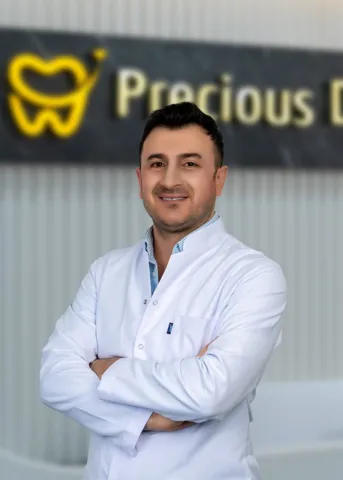 Medically reviewed by Dt. Hüseyin Yavuz Özbek, implant surgeon · Updated October 2026
On surgery day, your dentist checks your health and the plan, numbs the area (or a sedation team sedates you), removes any teeth, prepares the bone, places the implants, adds bone graft if planned, and closes the gum. For full-arch cases, temporary teeth are usually fitted the same or next day. A single implant takes about an hour; a full arch takes several hours.
This article walks through implant surgery from the dentist’s side, so you know what is happening at each moment. Every dentist works a little differently, and your own dentist will explain your plan. Read preparing for surgery day first.
1. Checks
Your dentist confirms your health, medicines and the plan. They check that you have eaten (or not) as instructed, and may take your blood pressure. This is your last chance to ask questions before you start. Agree your stop signal.
2. Numbing or sedation
Most implant surgery is done under local anaesthetic. Your dentist applies numbing gel, then gives injections into the gum. It takes a few minutes to work. They test before starting. If you are having sedation, a member of the sedation team gives it and monitors you throughout. Read anaesthetic and sedation.
3. Extractions
If teeth need to come out, they are removed first. Your dentist cleans the sockets carefully, because any infection left behind can affect the implants.
4. Preparing the site
The dentist opens the gum to see the bone, or in some cases works through a small hole. They then drill a series of gradually wider channels, following the plan made on your 3D scan. You will feel pressure and hear the drill. Water cools the bone.
5. Placing the implants
Each implant is screwed into its channel. The dentist checks how firmly it sits. That firmness, called primary stability, decides whether temporary teeth can be attached straight away.
6. Bone graft, if planned
If the scan showed thin bone, graft material may be added around the implants, sometimes covered with a membrane.
7. Closing
The gum is stitched around the implants. Some stitches dissolve; others are removed at a check appointment.
8. Temporary teeth
For full-arch cases, impressions or scans are taken and fixed temporary teeth are usually fitted the same day or the next. For single implants, a temporary tooth may or may not be fitted, depending on the site.
9. Before you leave
Your dentist or nurse explains aftercare: bleeding, swelling, painkillers, antibiotics, diet and cleaning. Ask for it in writing. Make sure you know who to call tonight. Read implant aftercare.
How long it takes
| Treatment | Approximate time in the chair |
|---|---|
| One implant | About an hour |
| Several implants | One to three hours |
| Full arch with extractions | Several hours, with breaks |
The dentist who does it
This is the day when the person matters most. Make sure you know who will be holding the drill, how often they do this surgery, and that they will see you at your check appointments. Read choosing a dentist and see the implant dentists list.
What you will hear and feel
Implant surgery is noisier than it is painful. You will hear the drill, the suction and the dentist talking to the nurse. You will feel water, pressure and some vibration, and at times a firm pushing as the implant is placed. Your jaw may tire from being open, so ask for short breaks. Some dentists use a bite block to rest your jaw on. If you need to swallow or cough, raise your hand.
How your dentist knows it went well
During surgery, your dentist checks the position of each implant against the plan and measures how firmly it sits. Some take an X-ray at the end to confirm the position. Ask them afterwards: “Did everything go as planned?” and “Was there anything you had to change?” A good dentist will tell you honestly, including if they added a graft or changed an implant size.
Temporary teeth on the same day
For full-arch cases, having fixed teeth within a day or two is one of the main reasons people choose this treatment. It depends on the implants being firm enough at surgery. If one or more implants are not firm enough, your dentist may wait before loading them, which can mean a denture-style temporary for a while. Ask about this possibility in advance so it is not a shock.
The evening after
Go straight back to the hotel. Rest with your head raised. Keep the cold pack going on and off. Take your painkillers and antibiotics on time, set alarms if needed, and eat something soft and cool once the numbness has gone. Do not rinse hard or spit on the first evening. Message the clinic if bleeding does not slow with gentle pressure on gauze. Read pain after treatment.
The next morning
Expect to feel puffy and tired. That is normal. You will usually have a check appointment within a day or two. Read check and adjustment appointments.
Questions to ask the evening before
- What time should I arrive, and how long will I be at the clinic?
- Can I eat breakfast? The answer depends on whether you are having sedation.
- Which teeth come out first, and in what order will you work?
- Will you take an X-ray at the end to check the implants?
- When will my temporary teeth be fitted, today or tomorrow?
- Who will look after me if I feel unwell during treatment?
How the dentist keeps you safe during surgery
Most of the safety work in implant surgery happens before the day, in planning: the 3D scan shows where the nerve in the lower jaw and the sinus in the upper jaw are, so the implants can be placed at a safe distance. On the day, the dentist follows that plan, uses sterile instruments and drapes, cools the bone with water while drilling, and checks each implant’s position and stability. If anything does not match the plan, for example softer bone than expected, a careful dentist adapts: a different implant size, a graft, or waiting before attaching teeth. Ask afterwards whether anything changed, and why.
What “firm enough” means for same-day teeth
Dentists often measure how tightly an implant grips the bone when it is placed. If the implants grip firmly, a fixed temporary bridge can usually be attached within a day or two. If one implant is less firm, the dentist may leave it out of the temporary bridge, or wait longer before loading. This is a clinical judgement made on the day. It is worth knowing in advance that it can happen, so that it does not feel like a broken promise.
If you feel unwell in the chair
Feeling faint, sick or anxious during long treatment is not unusual. Raise your hand. The dentist can stop, sit you up, give you water and let you rest. If you have a medical condition such as diabetes or a heart problem, tell the nurse at once if you feel different. Clinics that do surgery should be ready for this. Read health conditions to tell your dentist.
Full-arch and single implants compared
| Single implant | Full arch (All-on-4 or All-on-6) | |
|---|---|---|
| Extractions | Sometimes one tooth | Often several or all remaining teeth |
| Time in the chair | About an hour | Several hours |
| Temporary teeth | Sometimes, depends on site | Usually fixed bridge within a day or two |
| Swelling | Usually mild | Usually more, peaks day two or three |
| Check appointments | One or two | Two or three before you fly |
For what happens next, read implant aftercare and treatment timelines.
Surgery-day checklist
- Plan and stop signal agreed.
- Companion waiting.
- Aftercare in writing before I leave.
- Night-time number saved.
Common questions
Does implant surgery hurt?
With a working local anaesthetic you should feel pressure and vibration, not sharp pain. Tell your dentist at once if you do.
How long does it take?
Roughly an hour for a single implant. Several hours for a full arch with extractions.
Will I be awake?
Usually yes, with local anaesthetic. Some clinics offer sedation.
When can I eat?
Once the numbness wears off, soft and cool food. Your dentist will give you a diet for the coming weeks.
Sources
Checked October 2026. Where we give our own view as a clinic, we say so.
Send your question to a Precious Dental dentist
Send an X-ray or a few photos. A Precious Dental dentist will reply with a written plan and price. Ask us who would treat you at each stage. No obligation.